






Deciding to move to Spain for a life of sun, sea and sand is easy. But which Spanish beach location is best for you?
Deciding to move abroad for a life of sunshine, sea and sandy beaches may be the easy part. Choosing the right stretch of coastline to call home can be much more difficult.
Spain’s beautiful beaches, warm climate and relaxed outdoor lifestyle are among the biggest reasons to move to Spain. The country offers an enormous variety of coastal locations, from the Mediterranean charm of Santanyí in Mallorca and the lively city beaches of Málaga to stylish Sitges, the quieter coastline north of Valencia and the sun-soaked shores of Murcia. The Canary Islands offer another option, with dramatic volcanic landscapes, beautiful beaches and a warm climate throughout much of the year.
The best location will depend on the lifestyle you have in mind. You may be looking for excellent transport links and plenty to do, a relaxed place to raise a family or somewhere quieter and more affordable within easy reach of the beach. In this guide, we explore some of the best beach locations for expats in Spain, looking at their culture, surroundings and everyday lifestyle to help you decide which could be the right place to call home.
Balearic bliss: Santanyí, Mallorca
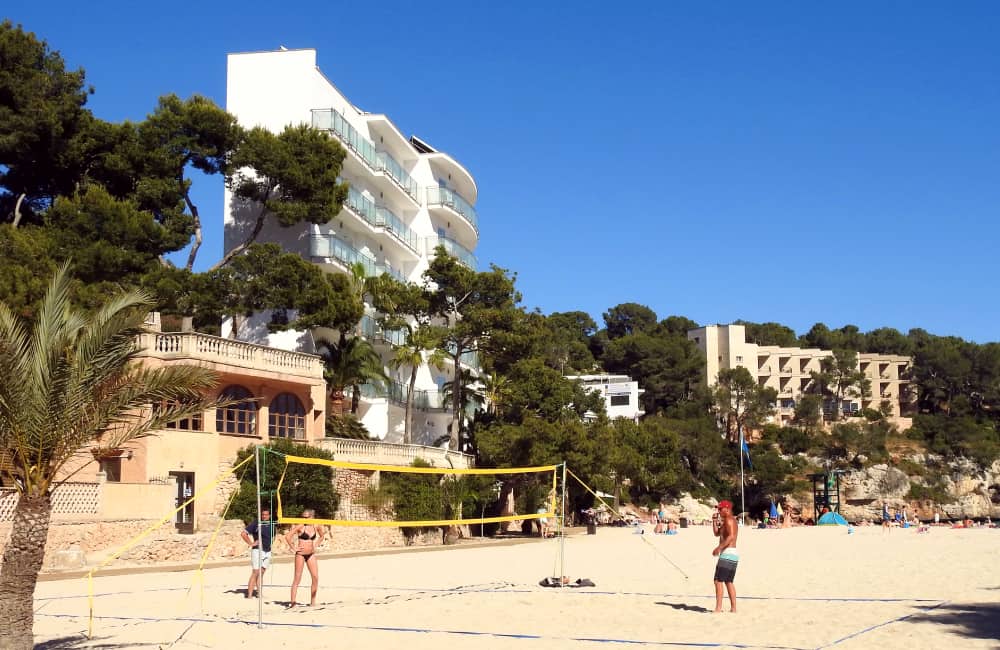
Away from the hectic resort scene in the south-west of the island, it doesn’t take long to figure out why Mallorca is so favoured by expats from all over northern Europe: those beaches, that climate, the people, the food – and oh, those picture-postcard coastal towns. Case closed.
But which corner of paradise would we choose to hang our sombrero and start living the dream? We rather like Santanyí, a ravishingly pretty town on the south-east coast, a hop, skip and a jump from unspoilt beaches and dreamy coves. The town itself is cool, classy and cosmopolitan, much favoured by artists and artisans, with a good choice of restaurants, a locally legendary jazz bar, a twice-weekly market and an easy-going communal vibe.
Property in Santanyí remains expensive, reflecting the popularity of south-east Mallorca among international buyers. In June 2026, the average advertised sale price was around €5,961 per square metre, an increase of 12.3% compared with the previous year. Actual prices vary considerably according to the type and condition of the property, its proximity to the coast and the availability of sea views.
Top Benefits for Expats
- Beautiful beaches and secluded coves close to home
- A relaxed, cosmopolitan community with a strong local identity
- Markets, restaurants, galleries and shops open beyond the summer season
- Excellent opportunities for swimming, cycling and coastal walks
- Regular flight connections between Mallorca and the UK
Expats’ top tip: Transporting your household belongings is very easy. Check out this guide on removals to Spain.
City on the sea: Málaga

In the 1950s, the first package tour operators to the Costa del Sol set down coachloads of tourists in newly transformed fishing villages and market towns from Nerja to Estepona. In 2025, Málaga-Costa del Sol Airport handled more than 26.7 million passengers, including 22.3 million international travellers, reflecting the city’s excellent connections with the UK and the rest of Europe. Combined with around 320 days of sunshine each year, a relaxed outdoor lifestyle, excellent food and a lively cultural scene, this accessibility continues to make Málaga an appealing place for expats looking to settle on Spain’s southern coast.
With a 3,000-year history written into its very stones, Málaga is adept at reinventing itself and has undergone its latest renaissance following the opening of the Picasso Museum in 2003. The fiestas were always there, now joined by arts and film festivals, galleries, and a great food and shopping scene. You’ll also find excellent healthcare facilities and private hospitals in Málaga where expats can receive a high standard of health care. A super-efficient public transport system gets you around easily and cheaply.
Expats gravitate towards apartments just outside the city centre. In June 2026, the average advertised property price across Málaga was around €3,784 per square metre, while asking prices in Huelin averaged approximately €4,400 per square metre. Although some smaller properties are advertised from around €165,000, homes close to Huelin Beach and the seafront generally command considerably higher prices.
Top Benefits for Expats
- Around 320 days of sunshine each year
- Excellent flight connections with the UK and Europe
- Beaches, culture, restaurants and shopping in one city
- Reliable public transport and strong healthcare facilities
- A wide choice of neighbourhoods close to the city centre and coast
Fun fact: Every city in Andalucia has its own flamenco style; la malagueña is Málaga’s. You’ll hear it but you won’t see it – flamenco dance is more Sevillana than Malagueño.
The costa less travelled: north from Valencia
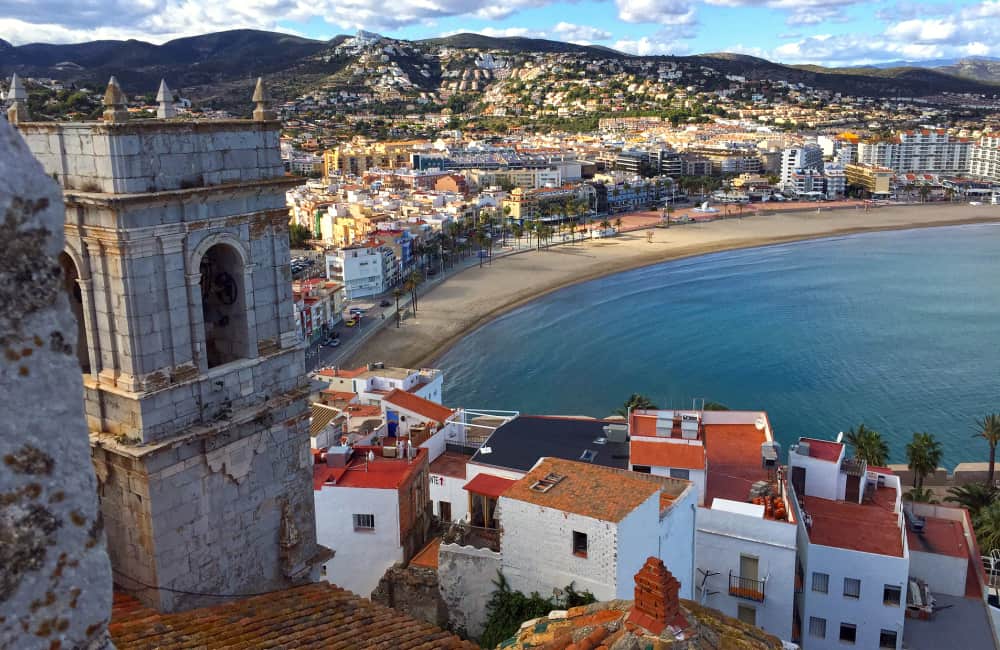
Costa del Azahar, better known as the Orange Blossom coast, is a 200km ribbon of the Costa Blanca between Catalonia and Valencia.
It’s not exactly undiscovered territory, but you’re definitely off the beaten track. Large developments shade away into the distance, mountains rise up behind white-sand beaches, and life unspools that little bit more slowly and a lot more – well, Spanishly. This is one for the pioneering expat undaunted by a more integrated life with smaller support networks and less infrastructure.
If that doesn’t quite describe you, there are several larger coastal towns such as Peniscola or Castellón de la Plana, which has a small but useful new airport. On the ground, getting around is easy enough but don’t expect high-speed transport links outside of Valencia.
Cost of living and property prices are appreciably lower on this stretch of coast; In June 2026, the average advertised sale price in Valencia city was around €3,370 per square metre, although homes in outer districts and towns across the wider province can still be found for less.
Top Benefits for Expats
- Quieter beaches and a slower pace of life
- Lower property prices than Valencia city
- A more traditional and immersive Spanish lifestyle
- Coastal towns including Peñíscola and Castellón de la Plana
- Easy access to beaches, mountains and outdoor activities
Expat essential: do bring some Spanish or be prepared to learn. English is spoken here and there, but don’t rely on it.
On the Costa Dorada: Sitges
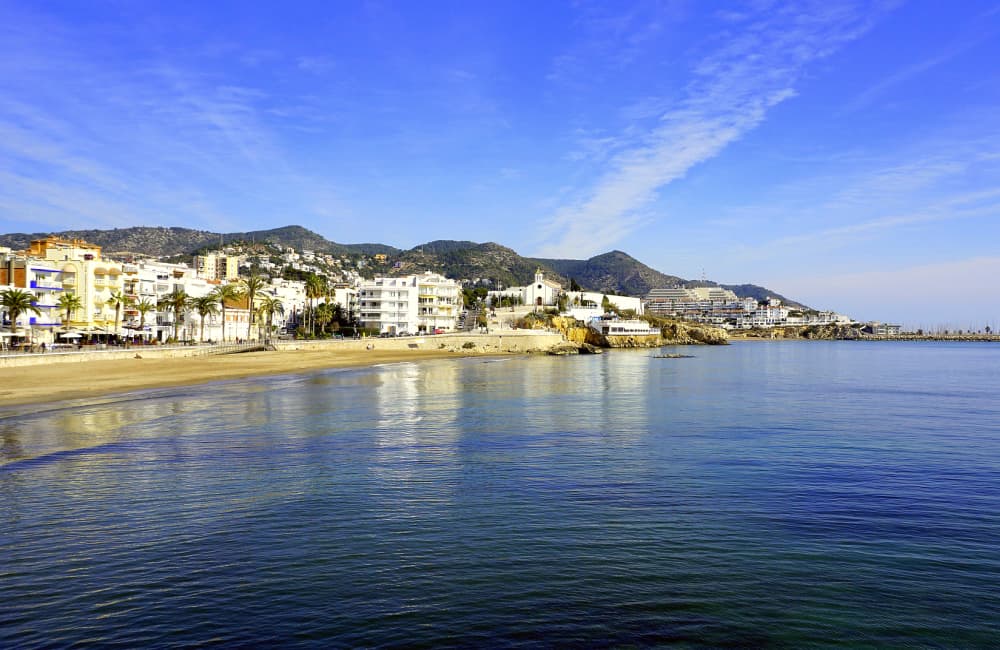
Fancy living between one of the coolest cities on the planet and a gilded stretch of coast? Care for a dash of bohemian lifestyle with that? It must be Sitges.
Ideally placed between Barcelona and beach, Sitges doesn’t hold back; its free-thinking, feel-good vibe has put it firmly on the map – and once it had been dubbed Spain’s St Tropez, the town was never going to stay under the radar for long.
Expats seeking nightlife, great food, good schools, and plenty of events from Gay Pride to fiestas need look no further – and many don’t. Although its property market is now among the most expensive on the Catalan coast. In June 2026, the average advertised sale price reached approximately €5,312 per square metre, rising to around €5,960 per square metre in the town centre. The usual sliding scale applies: the further back from the beach you go the less expensive property becomes, though you’ll probably be glad of your own transport; those mountain roads are punishingly steep.
That said, getting around and getting out of Sitges is easy, with good bus and train services. Barcelona’s international airport is a very nippable 20 minutes away.
Top Benefits for Expats
- Easy access to Barcelona and its international airport
- Beaches, nightlife, restaurants and cultural events
- Good schools and a well-established international community
- Reliable train and bus connections
- A lively, inclusive atmosphere with plenty happening year-round
In numbers: 17 beaches, 300 days of sunshine, one international film festival, five museums, umpteen galleries. Population: 28,000 and counting…
Basque coast: San Sebastián / Donostia

Few towns rival the sheer glamour and chic of San Sebastián, a brightly polished jewel on the north coast, with France a scant 15-minute drive away. It’s almost ridiculously scenic, boasting belle époque and contemporary architecture, broad promenades, plazas and leafy squares, a far cry from the high-rise clutter on stretches of the Mediterranean.
Culturally, while San Sebastián offers expats and visitors an embarrassment of riches, this is also a distinctively Basque city, and Basque (Euskera) is the official language. It bears no resemblance to any Spanish tongue or indeed any other Indo-European language. Castilian Spanish is spoken in the cities, but you’ll need Euskera too.
Language differences aside, other contrasts with the southern costas quickly become apparent. A less sun-drenched climate keeps those Basque hills green and quickens the pace of life; when the rain drives it indoors, you can expect to be compensated by the cuisine, regarded by many as one of the best in the world.
Does any of this come at a price? Well, yes. The cost of living is generally higher in the north of Spain, higher still in San Sebastián and property prices are among the highest in the country.
Top Benefits for Expats
- Beautiful beaches, promenades and elegant architecture
- World-class restaurants and pintxos culture
- Easy access to France and the Basque countryside
- A lively cultural scene with festivals, museums and events
- A greener climate and strong year-round city lifestyle
Foodie fact:: As of 2026, San Sebastián and its surrounding area boast 19 Michelin stars between them.
On the Costa Cálida: Murcia
 Murcia’s Costa Cálida is sometimes overlooked in favour of the Costa Blanca and Costa del Sol, but that is part of its appeal. The region has more than 250 kilometres of coastline, stretching between the calm waters of the Mar Menor and the open Mediterranean, with around 300 days of sunshine each year.
The choice of coastal locations is surprisingly varied. Los Alcázares and Santiago de la Ribera offer promenades, shallow water and an established year-round community beside the Mar Menor. La Manga places residents between two seas, while Cabo de Palos combines a traditional harbour with small coves, seafood restaurants and some of the region’s best-known diving spots. Further south, Puerto de Mazarrón offers sandy beaches and a more relaxed coastal setting.
Murcia may suit expats looking for warm weather and coastal living without the bustle or higher prices associated with some of Spain’s better-known beach destinations. Cartagena provides shops, healthcare, culture and historic attractions within reach of many coastal communities, while the area’s beaches, golf courses and water sports make outdoor living a major part of everyday life.
Although prices have risen sharply, property remains relatively affordable by the standards of Málaga, Mallorca or Sitges. In June 2026, average advertised sale prices stood at around €1,997 per square metre in Los Alcázares, €2,393 in La Manga del Mar Menor and €2,595 in Santiago de la Ribera. Homes near the beach, properties with sea views and newer developments can command considerably more.
Top Benefits for Expats
- Around 300 days of sunshine each year
- Quieter coastal living and relatively affordable property
- A choice of beaches along the Mar Menor and Mediterranean
- Easy access to Cartagena’s shops, healthcare and culture
- Excellent opportunities for golf, diving and water sports
Geographical fact: La Manga is a narrow strip of land around 24 kilometres long, separating the calm waters of the Mar Menor from the Mediterranean. In places, you can walk from a beach on one sea to a beach on the other in just a few minutes.
Out in the Atlantic: The Canary Islands
 The Canary Islands offer a different type of Spanish beach life. Located in the Atlantic Ocean, the archipelago enjoys mild temperatures throughout the year and has more than 1,500 kilometres of coastline and over 500 beaches, ranging from wide golden bays to secluded coves and dramatic stretches of black volcanic sand.
Each island has its own character. Tenerife and Gran Canaria combine lively coastal resorts with cities, historic towns and varied landscapes. Fuerteventura is particularly well known for its long white-sand beaches and water sports, while Lanzarote offers striking lava fields, whitewashed villages and a quieter volcanic setting. This variety makes it possible to choose between a sociable resort lifestyle and somewhere more peaceful and closely connected to nature.
The islands may appeal to expats looking for outdoor living, dependable winter sunshine and easy access to the coast. However, island life can feel quite different from living on mainland Spain, so it is worth considering flight connections, local services and the pace of life on each island before deciding where to settle.
Property prices have risen across the archipelago. In June 2026, the average advertised sale price across the Canary Islands was approximately €3,297 per square metre. The average was around €3,423 per square metre in Santa Cruz de Tenerife province and €3,099 in Las Palmas province, although prices vary considerably between islands and are often higher in popular coastal resorts.
Top Benefits for Expats
- Mild temperatures and outdoor living throughout the year
- More than 500 beaches across several distinctive islands
- A choice between lively resorts, cities and quieter coastal areas
- Excellent opportunities for hiking, cycling and water sports
- Regular flight connections with the UK and mainland Europe
Fun fact: Tenerife is home to Mount Teide, Spain’s highest peak at 3,718 metres. Measured from the ocean floor, the Teide-Pico Viejo volcanic structure rises approximately 7,500 metres, making it one of the tallest volcanic structures in the world.
Our Recommended Picks
If you want a lively city lifestyle with beaches, excellent transport links, healthcare, restaurants and plenty happening throughout the year, Málaga is our recommended choice.
If you would prefer a quieter pace of life, more affordable property and easy access to beaches, golf and water sports, Murcia’s Costa Cálida may be the better fit.
Thinking of moving to Spain?
Once you’ve made the hard decision of which Spanish beach to make your home, you’ll then need to organise your removal or shipping of your belongings to Spain.
Fortunately our team at PSS International Removals will be able to take all the stress out of your move for you. We help hundreds of families move from the UK to Spain every year so no matter whether you’re moving to the Costa Del Sol, the Balearic Islands or even the Canaries, we’ll be able to organise everything for you.
For more information call our team on 020 8686 7733 or visit our removals to Spain page to get a quick quote online.