





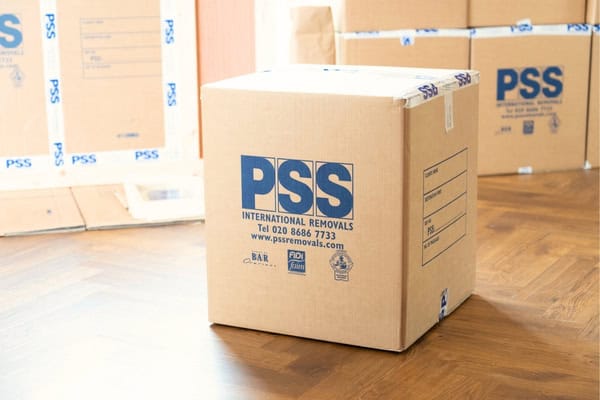
You’re not moving an entire household to Australia. Perhaps it’s a one-bedroom flat, a few favourite pieces of furniture or boxes you’ve accumulated over years in the UK. Hiring a whole shipping container for that would feel excessive, but leaving everything behind isn’t attractive either.
Part load removals to Australia solve that problem by combining your belongings with other consignments travelling to the same country. You pay for the space you use rather than a whole container. For example, PSS lists a one-bedroom groupage move to Melbourne from £1,405, although your price will depend on the surveyed volume and delivery arrangements. You’ll also need some flexibility around the sailing date.
Key Takeaways
- Part load, groupage and shared container all describe shipping your own goods alongside other customers’ shipments.
- Your share is generally calculated using cubic feet of packed space, which is why a survey gives a better estimate than counting rooms.
- Groupage is often better value for boxes, selected furniture and small homes, while a sole-use container can suit larger loads or tighter deadlines.
- The quoted door-to-door time includes consolidation, sailing, customs and delivery, not just time on the ship.
- Australian Border Force and biosecurity requirements still apply to your belongings, even though the container is shared.
- Good export packing and a numbered inventory help protect and identify your goods throughout the journey.
How Does Part Load Shipping to Australia Work?
A part load removal means your furniture and boxes occupy a reserved share of a sea container with goods from other households. The moving company collects, packs and identifies your items separately, then consolidates shipments before the container sails. At the Australian end, the container is cleared and individual consignments are delivered to their owners.
The method is commonly called groupage shipping or less-than-container-load (LCL) freight. For household moves, however, the important distinction isn’t the industry abbreviation. It’s that you are buying space and a managed removal service, not a private container.
How do part load removals work for international moves?
- Arrange a survey. Provide an inventory or ask for a home or video survey to measure what will go.
- Confirm the quote. Agree the packed volume in cubic feet and check collection, destination and handling inclusions.
- Prepare the goods. PSS can export-wrap furniture, pack fragile pieces and create a detailed inventory.
- Collect and label. The consignment is identified for the correct destination and managed separately from other customers’ items.
- Consolidate in the UK. Suitable loads are combined in a shared container bound for Australia.
- Ship and clear. The container travels by sea and its contents go through Australian customs and biosecurity processes.
- Deliver to your home. After clearance and separation, your shipment is delivered under the agreed service.
Because several customers share the same container, the sailing is typically less flexible than a sole-use booking. Make that part of your arrival plan rather than assuming the goods will follow your flight immediately.
How Much Does a Part Load Removal to Australia Cost Compared to a Full Container?
For small loads, groupage is usually more economical because you aren’t paying for empty container capacity. PSS’s Australia prices show £1,405 for a one-bedroom groupage move to Melbourne and £4,715 for a three-bedroom 20ft container move. The examples involve different households, so compare your own inventory under both methods rather than treating those figures as competing offers.
| PSS example to Melbourne | Shipping method | Example price | Useful comparison |
| Five boxes | Shared sea shipment | £245 | Lowest published small-consignment example |
| One-bedroom home | Groupage | £1,405 | Relevant to a flat or selected furniture |
| Three-bedroom home | 20ft sole-use container | £4,715 | Relevant when much more furniture is moving |
| Four-bedroom home | 40ft sole-use container | £7,392 | Relevant to a larger family household |
To get a useful like-for-like comparison, ask the mover to quote your same inventory as groupage and, where relevant, a sole-use container. A one-bedroom label doesn’t describe whether you’re bringing just a bed and desk or an overfilled flat with bulky furniture.
What determines the typical cost of shared container removals?
The surveyed volume is the starting point, but it isn’t the only price driver. Your UK collection postcode, Australian destination, parking or lift restrictions, packing requirements, chosen protection cover and any inspection-related charges can all affect the final amount.
- Cubic feet: furniture shape and cartons determine how much shared space you need.
- Collection access: long carries, upper-floor stairs or restricted parking can increase labour.
- Destination access: a city-centre apartment and a remote regional property require different delivery plans.
- Packing: fragile artwork or large furniture may need custom protection.
- Clearance and inspection: Australian biosecurity treatment is not interchangeable with the normal shipping fee.
The removals calculator helps estimate volume. For a confirmed price, contact PSS with your inventory and city. Qualifying international freight is generally zero-rated for UK VAT under HMRC’s VAT guidance.
Is Groupage Shipping Cheaper Than a Sole-Use Container?
Usually, yes for a modest shipment. It stops being the obvious bargain when the load is large enough that the groupage price approaches a sole-use 20ft container quote. There is no published universal break-even volume. Your measured inventory and current route prices must decide it.
| Factor | Part load / groupage | Sole-use container | What to choose |
| Pricing | Pay for allocated cubic feet | Pay for the booked container | Groupage for lower volume |
| Departure | Depends on consolidation schedule | More control over loading date | Sole use for tight timing |
| Handling | Collected and consolidated with other loads | Usually loaded as one household consignment | Extra packing matters for groupage |
| Capacity | Boxes to selected rooms of furniture | Whole household | Compare both when volume grows |
| Flexibility | Delivery window can be broader | More direct scheduling | Sole use for firm move-in dates |
A shared container isn’t automatically riskier when a mover uses good export packing, clear labelling and sensible handling. Yet your goods do pass through a consolidation process, so ask how individual items are protected and documented. If your shipment includes fragile antiques, discuss crating and whether another shipping arrangement is preferable.
A practical alternative to a full container
Groupage works particularly well when you keep the pieces that matter rather than filling the load with cheap replacements. A sofa, bed, books and personal boxes can travel together even though they don’t fill a 20ft container. If you’re unsure what to leave behind, compare the quote with and without the bulkiest pieces before deciding.
How Long Does a Shared Container Household Move Usually Take?
Shared-container delivery takes longer than the sailing alone because your consignment must be collected, consolidated, loaded, transported, cleared and delivered. PSS’s Australia shipping guidance gives indicative sea-freight timings, but an exact date depends on the groupage schedule and the destination.
| Destination | Main shipping consideration | Delivery-stage variable | What to confirm |
| Perth / Fremantle | Western Australian discharge and local distribution | Biosecurity and delivery availability | Expected sailing and clearance window |
| Adelaide | Sailing or onward distribution arrangements | Local delivery schedule | Whether onward road movement is needed |
| Melbourne | Shared-load consolidation and port handling | Destination warehouse release | Estimated door-to-door period |
| Sydney | Port handling and city access | Building restrictions and delivery booking | Clearance and apartment access |
| Brisbane | Port or onward distribution arrangements | Local and regional delivery | Whether the address is in the quoted service area |
| Regional Australia | Main port plus onward transport | Distance and carrier availability | Added delivery time and charges |
Instead of counting only weeks at sea, request a breakdown of the UK consolidation window, ocean movement, Australian clearance and final delivery. If you can only move into your property on a specific date, ask whether temporary storage is available and what it will cost.
Which Items Are Suitable for Part Load International Removals?
You can send far more than boxed clothing in a groupage container. Selected furniture, bicycles, artwork and other household belongings can be suitable when properly packed. The deciding factors are their value, the space they occupy, their condition and whether Australian import rules allow them.
Good candidates include:
- Sturdy furniture and small tables that are expensive or difficult to replace.
- Beds, desks and sofas that fit your new Australian home.
- Books, clothing and ordinary personal effects in strong cartons.
- Artwork, mirrors and fragile objects with appropriate export wrapping or crating.
- Clean bicycles and sports equipment that meet biosecurity requirements.
Items needing extra consideration include:
- Garden tools and outdoor furniture with soil or plant matter.
- Timber, wicker, cane and untreated natural materials.
- Open food, plants, seeds and biological products.
- Flammable substances, fuels and other hazardous goods.
- Vehicles and equipment subject to separate import approval or special handling.
Australian Border Force’s unaccompanied-goods guidance explains that qualifying personal effects generally require 12 months of ownership and use overseas for duty and GST relief. The Department of Agriculture’s biosecurity rules also require careful preparation of goods that could carry soil, pests or plant material.
A shared container doesn’t reduce those requirements. It makes a well-documented inventory even more important because the destination team must identify your individual shipment during clearance and delivery. PSS’s customs information can help you prepare the required forms and declarations.
Shared Container Shipping for Small Household Moves Internationally
A small move can include furniture, boxes or a mixture of both. The advantage of part load is that it doesn’t demand a whole-house commitment. You can send the belongings that genuinely make sense to keep and arrange a smaller delivery at the Australian end.
Part load removal for a few pieces of furniture
For a sofa, dining table and a handful of cartons, a mover should assess volume, access and whether the furniture needs dismantling. It may be worth constructing a crate or using additional protection for a single valuable piece, but those materials also add volume and cost.
Don’t assume a specific minimum shipment size without checking the service. Some box-shipping options are designed for much smaller consignments than furniture removals, and the price structure may differ. Ask for both if your load is near the lower end.
Groupage shipping for boxes and personal belongings
For boxes only, consistency simplifies the quote. Use similar, sturdy cartons so the load can be measured and packed securely, and label each carton with a numbered description. PSS offers export shipping boxes suited to international transport.
If you’re returning to Australia with mostly clothes and books, compare shipping by sea against airline baggage and air freight. For one or two urgent boxes, speed may be worth the premium, but it rarely makes sense to fly an entire small household.
Which UK Removal Companies Offer Shared Container Shipping to Australia?
Look for an international mover that routinely handles small household shipments, not just full-container relocations. Ask whether the quote covers export packing, shared-container consolidation, the Australian destination agent, customs support and final delivery. A named move coordinator helps when the load passes through more than one handling stage.
Check what shipment protection is available and how claims are handled if something is damaged. Be cautious about vague promises of association membership or accreditation unless the company can show current evidence. The practical test is whether the provider can explain your route, your handling arrangements and your written quote.
PSS’s international removals team can arrange a survey and help select groupage or sole use according to your household. You can also find your nearest branch to discuss difficult access or an unusual inventory.
Expert Viewpoint: Choose the Container by Volume, Not by Habit
Part load is a good solution when the possessions you’re bringing to Australia don’t justify a private container. The mistake is choosing the method before measuring the packed load. You may discover that a few bulky pieces push the groupage quote close to a sole-use option, or that selling them saves far more than expected.
We recommend starting with a realistic inventory and the date you can receive goods in Australia. Next, compare the cost of groupage with the convenience of a sole-use container where the volume warrants it. Finally, clean and declare outdoor items before the packing day, because a preventable biosecurity problem can affect both price and timing.
Frequently Asked Questions About Part Load Removals to Australia
What is the minimum volume for a part load removal to Australia?
Minimum volumes vary by operator and service. A boxes-only shipment may be accepted at a much smaller size than a furniture-inclusive groupage removal, so there is no single useful national minimum. Ask your mover to price the actual cubic feet of your shipment and compare the boxes service if you’re sending very little.
Do I pay import duty on used household belongings in Australia?
Qualifying used personal effects may enter Australia without duty or GST, subject to the relevant concession conditions. Ownership and use history must be considered, and the shipment needs accurate customs documentation. New purchases and certain special categories of goods may not qualify, even when shipped alongside your existing household belongings.
Is my furniture safe in a shared container?
It can be transported securely when it is properly export wrapped, labelled and handled by an experienced team. Shared shipping introduces consolidation and separation stages, which is why protective materials and a detailed inventory are important. Ask what cover applies and whether large or delicate furniture needs additional crating.
Can I choose my exact delivery date with a part load?
Usually not at the outset, because the departure date can depend on when a shared container is ready and the shipment must still clear Australian border processes. A mover can provide a planning window and schedule delivery after release. If you have a fixed handover date, ask whether storage or sole-use shipping would suit you better.
What happens if my shipment is selected for biosecurity inspection?
Officials may examine items that could carry soil, pests or other restricted material. Clean goods can be released after assessment, while contaminated items may require treatment, export or destruction at your expense. A transparent inventory and careful cleaning reduce avoidable problems, although they cannot guarantee that no inspection will take place.
Do I need to be in Australia when my goods arrive?
Your arrival and residency documents can affect customs formalities, but the exact clearance arrangements depend on the shipment and whether an agent acts for you. Don’t assume that goods arriving ahead of you will be released immediately. Discuss timing with the mover and customs representative before choosing a sailing.
How far ahead should I book a part load to Australia?
Seek quotes well before your preferred collection date, especially if you need a particular arrival window. Groupage depends on consolidation and sailing availability, so flexibility usually helps. An early survey also leaves time to sort items, prepare the detailed inventory and clean outdoor equipment without rushing at the end.
Plan Part Load Removals to Australia With PSS
A small move still involves the full international journey: UK collection, export packing, consolidation, sea transport, Australian customs and delivery. PSS International Removals can coordinate those stages and explain whether your belongings are better suited to a groupage container, a boxes-only service or a larger sole-use option. That helps you avoid paying for unnecessary capacity while keeping the shipment manageable.
Explore Australia removals, use the cost calculator to estimate your load, or compare smaller shipments. For a measured quote and a delivery window that fits your plans, contact PSS.
Disclaimer: Australian customs and biosecurity authorities determine the treatment of imported goods. Your final shipping cost and delivery schedule depend on the agreed service and shipment details.